▸ Hydrogen Infrastructure

PRS Hydrogen

Hydrogen Pressure Regulating System Design

A compact hydrogen Pressure Regulating System built from scratch, with no existing reference design to start from. Because hydrogen does not behave like CNG or natural gas, the real work was fitting every process and instrumentation component into a four-meter enclosure while keeping the system safe, accessible, and practical to build.

PRS Hydrogen Pressure Regulating System Enclosure Design
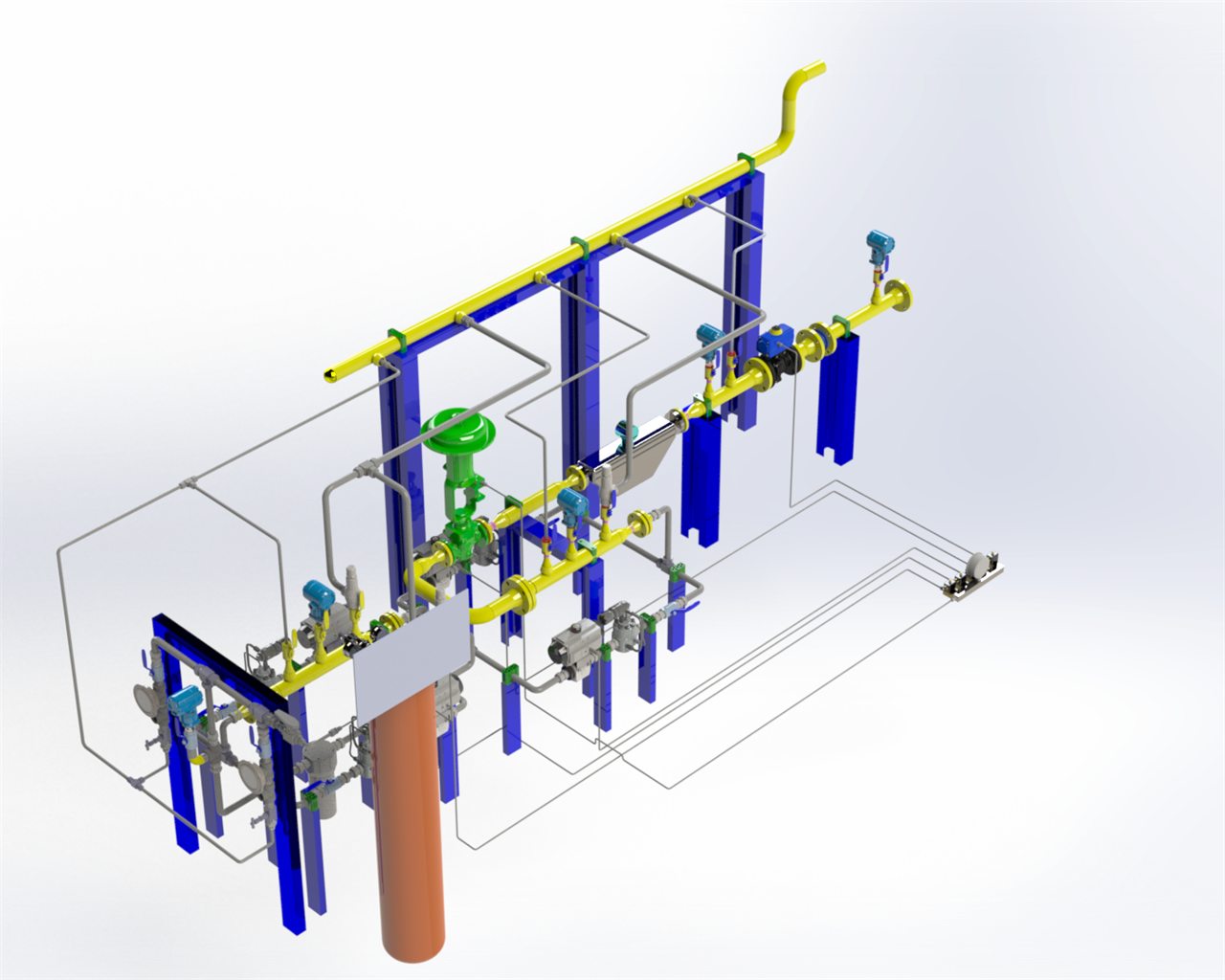
3D model — hydrogen PRS skid: regulation, filtration, instrumentation, and safety relief inside a 4-meter enclosure
01 — Context

Project Overview

Hydrogen Pressure Regulating Systems carry a different set of problems than conventional natural gas systems. Hydrogen's small molecular size, material compatibility concerns, and distinct safety requirements all mean the design cannot simply borrow from a CNG or natural gas layout — assumptions that hold for one do not automatically carry over to the other.

This project involved designing a compact hydrogen PRS enclosure while keeping safety, accessibility, maintainability, and engineering-standard compliance intact. One of the hardest parts was practical, not theoretical: there were very few real references or existing implementations for hydrogen infrastructure to lean on.

The result was a strong, hands-on lesson in hydrogen system design — and in balancing technical requirements against the real-world constraints of space, fabrication, and access.

02 — Brief

Project Objectives

01

Design a compact hydrogen Pressure Regulating System.

02

Ensure safe operation under hydrogen service conditions.

03

Maximize accessibility for operation and maintenance.

04

Optimize equipment arrangement within a limited enclosure space.

05

Maintain manufacturability and practical installation considerations.

03 — What Was Hard

Engineering Challenges

Challenge 01

Limited Design References

Unlike conventional natural gas systems, hydrogen infrastructure has far fewer established references and industry examples to copy from. That put more weight on engineering judgment and careful evaluation of each design decision.
Challenge 02

Space Constraints

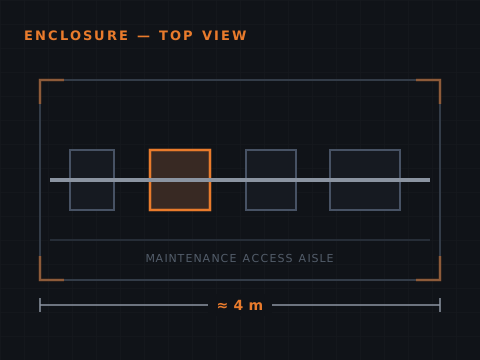
The entire system had to fit inside an enclosure roughly four meters long. Every component location and piping route had to be planned to avoid operational and maintenance headaches down the line.

Challenge 03

Hydrogen-Specific Requirements

Hydrogen brings extra considerations that a CNG layout never has to worry about:

  • Small molecular size and higher leakage risk
  • Material compatibility and hydrogen embrittlement
  • Enhanced safety requirements
  • Ventilation and accessibility
  • Instrumentation reliability
04 — How It Was Built

Design Approach

The enclosure was laid out to carry every major process and instrumentation component needed for safe pressure reduction and control. With no prior design to start from, the layout was built up component by component — checking at each step that the enclosure constraint and the safety-access requirements both still held.

Design Priority

Component accessibility and maintenance clearance were treated as first-class constraints, not afterthoughts — all while keeping the overall footprint compact.

Main Components

Pressure Regulators
Filters
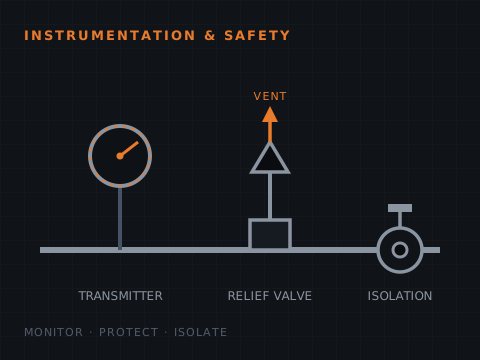
Pressure Transmitters
Safety Valves
Isolation Valves
Instrumentation Devices
Piping & Fittings
05 — What Drove Decisions

Key Engineering Considerations

AccessibilityOperate & Maintain

Equipment placement was optimized so operators and maintenance personnel can safely reach critical components without tearing down half the system to get there.

SafetyNon-Negotiable

Safety shaped every stage of the design. The main levers were:

Equipment spacing Vent routing Instrument positioning Isolation capability Maintenance access
ManufacturabilityBuild It For Real

The layout was developed with fabrication practicality in mind — simpler assembly, cleaner installation, and room for future modifications without a redesign.

Technical Detail

Why hydrogen changes the design rules+

Hydrogen's small molecule slips through seals and joints that would hold natural gas without complaint, so leakage paths and material selection get far more scrutiny. On top of that, hydrogen embrittlement can degrade certain metals over time, which narrows the list of acceptable materials for wetted parts.

  • Tighter sealing and joint integrity to limit leakage
  • Material compatibility screening against embrittlement
  • Ventilation designed around hydrogen's buoyancy and dispersion behavior
Fitting everything into a 4-meter enclosure+

With a fixed enclosure length, moving one component almost always forces a change somewhere else. The layout was iterated as a whole rather than one part at a time, so regulators, filters, valves, and instrumentation all earned their position against both clearance and access requirements.

  • Iterative whole-layout planning instead of part-by-part placement
  • Maintenance clearances protected even at the tightest footprint
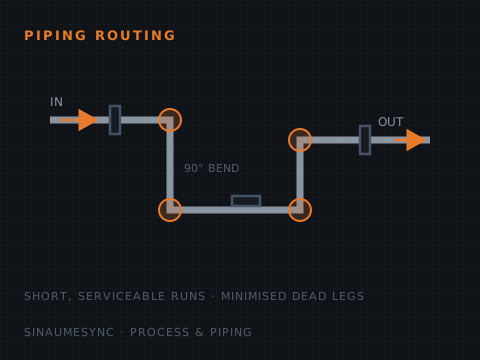
  • Piping routes kept short and serviceable
06 — Takeaways

Lessons Learned

This project sharpened my practical understanding of hydrogen system design and the kind of engineering judgment it takes when the reference material runs out.

Balancing safety and manufacturability

A safe design that can't be built cleanly isn't finished — both have to win at the same time.

Designing within severe space limitations

A fixed enclosure forces discipline; every component has to justify the space it takes.

Applying judgment when references are limited

Without an established example to copy, decisions lean harder on reasoning and first principles.

Understanding hydrogen-specific challenges

Leakage, embrittlement, and ventilation behavior all change what a "good" layout looks like.

Prioritizing maintainability without compromising integrity

Access and serviceability were protected without giving up safety or system performance.

The Through-Line

Emerging energy infrastructure rewards combining engineering standards, practical experience, and critical thinking — especially when no one has built quite this thing before.

07 — My Role

Personal Contribution

  • Developed the equipment layout and enclosure arrangement.
  • Optimized piping routing within tight space limitations.
  • Coordinated instrumentation placement.
  • Evaluated maintenance accessibility requirements.
  • Supported fabrication and implementation activities.
  • Contributed to engineering decisions for hydrogen service applications.
08 — Visuals

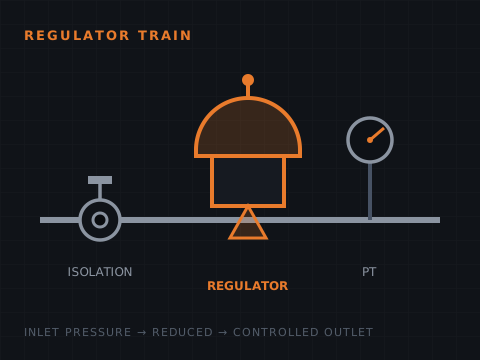
The 3D model of the skid, alongside schematic detail views of the enclosure layout, regulator train, instrumentation, and piping.

09 — Keep Reading

Need Engineering Support?

Practical support for piping and process design, pressure reducing stations, CNG and hydrogen systems, gas distribution, mechanical design, technical documentation, and design review.

Request Consultation Briefly outline the scope and timeline.